KLIP RIVER VALLEY · NAMIBIA

Protecting lions
Protecting the people who share their land
In the remote north-west of Namibia, a project is rewriting the rules of coexistence between people and one of Africa's last great predators
WHERE WE WORK
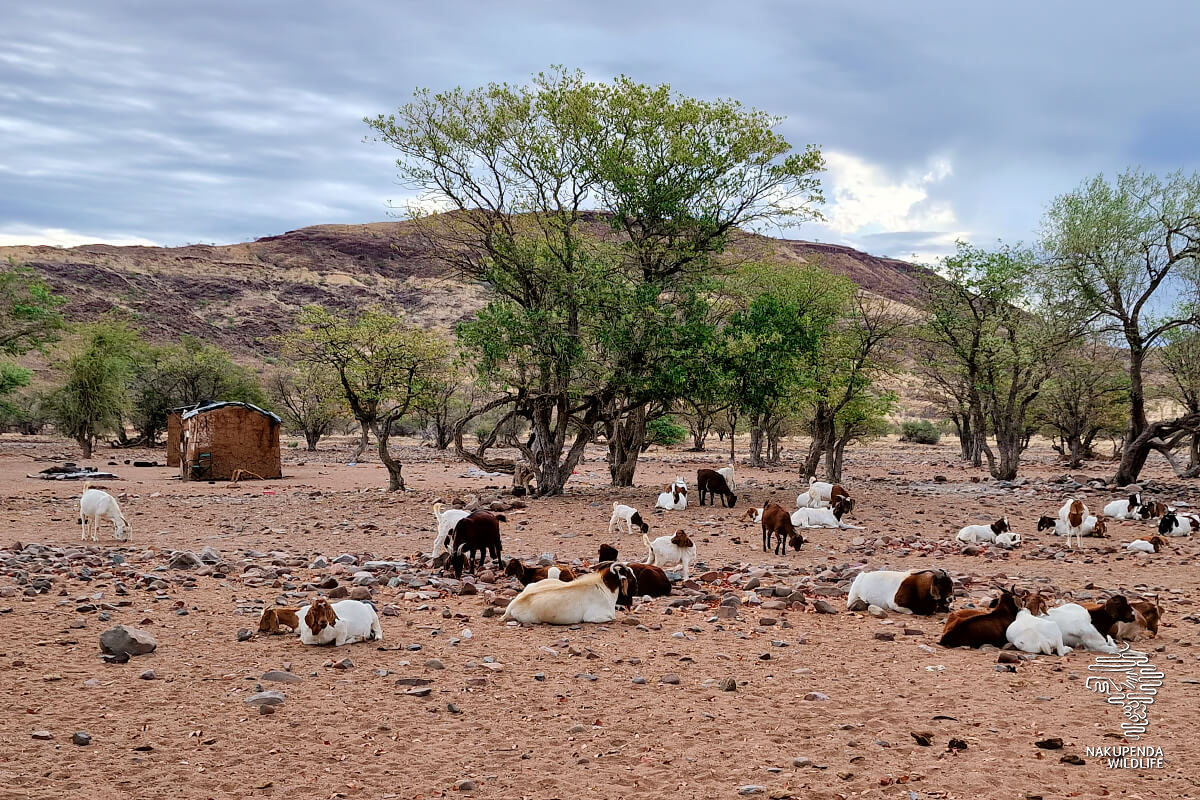
In the ≠Khoadi-//Hôas Conservancy, among the mountains of the Grootberg, lions roam an unfenced landscape shared daily with the pastoralist families who call it home. There are no national park boundaries to separate people from wildlife here — this lion population's survival depends entirely on local communities choosing to live alongside it, and, crucially, benefiting from that choice.
Nakupenda Wildlife has been working in this landscape since 2022 — walking the same ground as the lions and the families who live beside them. Our goal is as simple as it is ambitious: to see conflict coming before it costs a life.

The Problem
Every livestock kill is a real economic loss for a family that lives off its herd. Every loss breeds fear and resentment, and too often ends in retaliation the single greatest driver of lion decline outside protected areas across Africa. Breaking this cycle requires something that, until now, has been missing here: knowing where, when, and why conflict happens, before it happens.
Our Approach: Science and Community, Working Together
The project rests on two pillars that reinforce each other.
Scientific Monitoring Through Camera Trapping
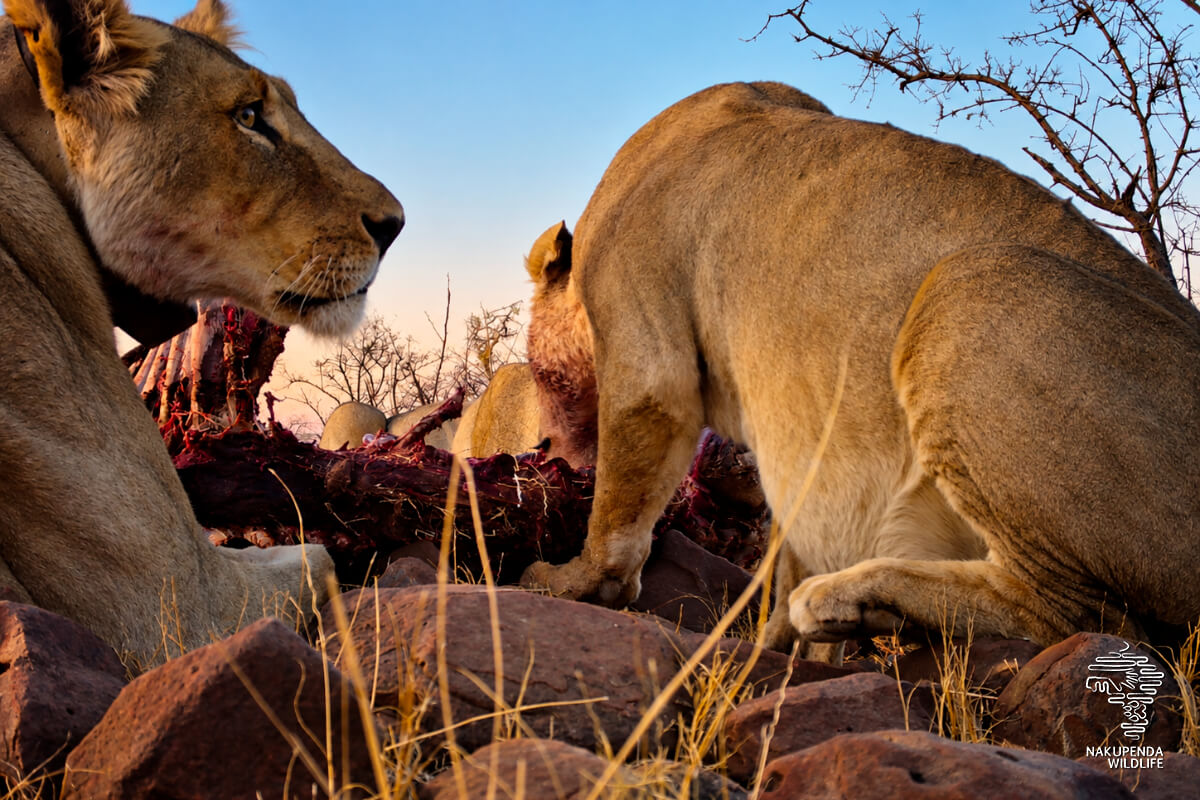
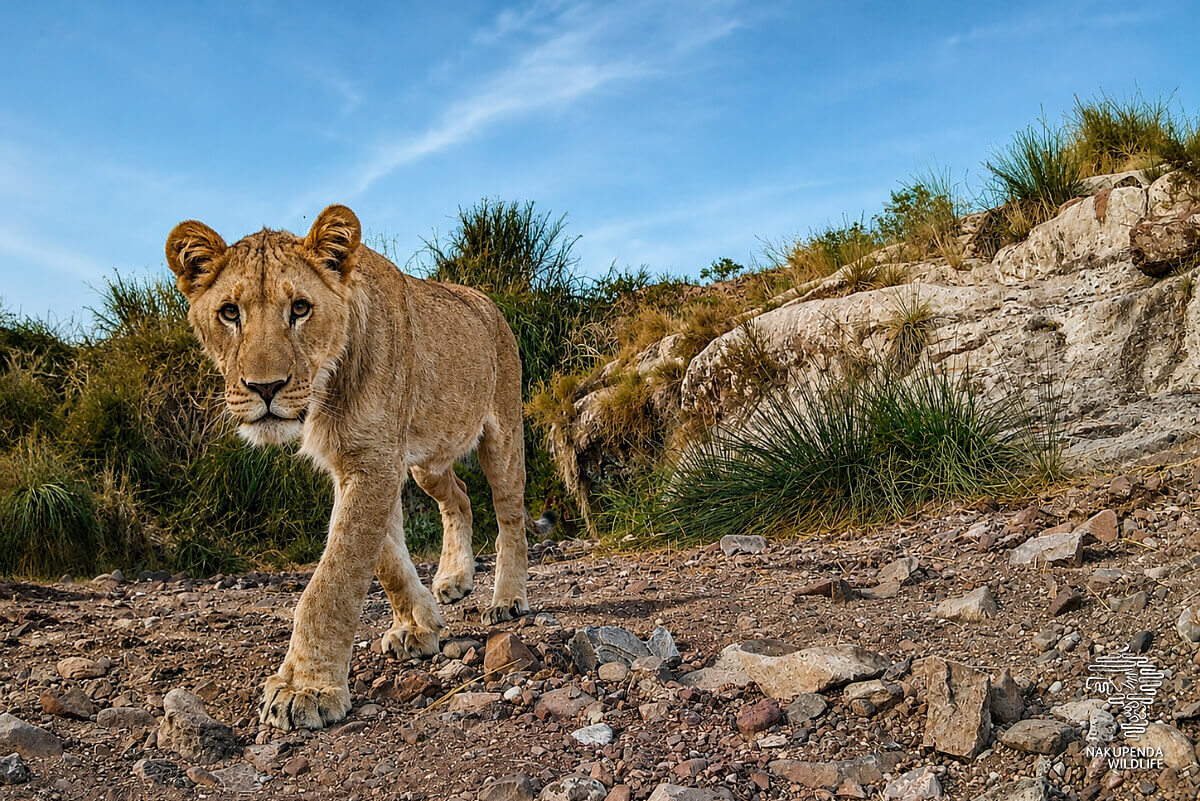
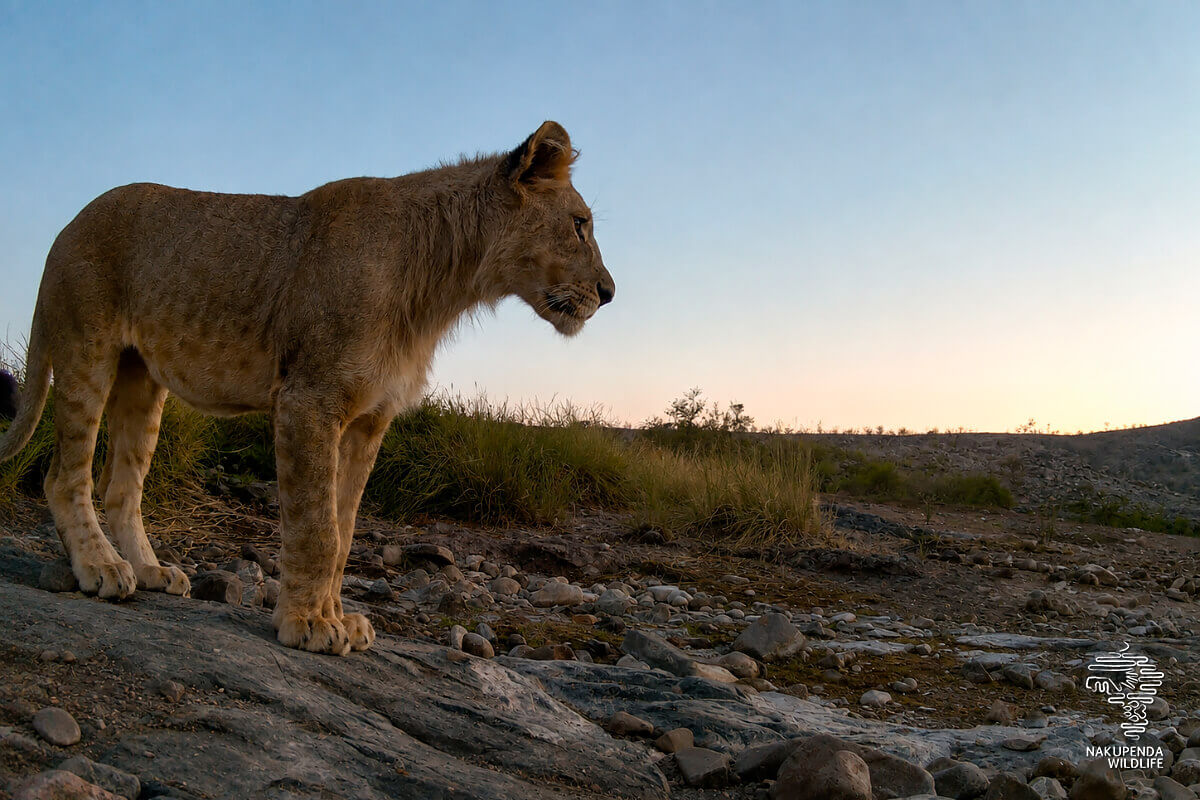
A network of camera trap stations across the Klip River Valley generates continuous data on lion presence, density, and behaviour. To date, the project has produced over 15,000 wildlife detection events, more than 2,000 of them large carnivores one of the richest datasets ever collected in this part of Namibia.
This data lets us pinpoint:
- spatial hotspots of lion activity, concentrated around valley systems and key water sources;
- activity rhythms: lions here are overwhelmingly nocturnal, with 75% of detections occurring after dark, and only limited overlap with the hours when people and livestock are active;
- the narrow windows where these two worlds meet — the moments when risk is highest.
That means we can act before conflict occurs: reinforcing enclosures, repositioning livestock kraals, stepping up vigilance at dawn and dusk instead of always responding after the damage is done.
Community-Based Monitoring: Local Eyes on the Ground
Science alone isn't enough. The people who live alongside lions every day hold knowledge no camera trap can capture. That's why we've launched a community monitoring program inspired by a long-running model Wildlife Initiative (the international network from which Nakupenda emerged) has successfully applied to snow leopard conservation in Mongolia that puts local families at the center:
- a young woman from the Conservancy, trained as a conservation biologist, acts as the daily link between the project and the community;
- 35 households, living at the edges of the study area, are directly involved and paid to complete weekly reports on signs of predator presence, livestock losses, sightings, damage to property or crops, and any direct encounters with carnivores.
The result is a living map of conflict, updated week by week, layered onto the camera trap data giving us a complete picture, spatial, temporal, and human, of what is really happening on the ground.

Why It Works
This model, already tested and proven by the Nakupenda team through Wildlife Initiative, delivers two outcomes at once. It produces solid scientific evidence to guide real mitigation measures: reinforced night enclosures, kraals relocated away from known hotspots, community-led early warning systems. And it shifts how people see the wildlife around them: participants come to recognize that disease and mismanagement cost them far more livestock than lions ever do, and they begin to see wildlife as something worth protecting, not just fearing.
Involving the community economically, through direct payment and real employment opportunities , isn't a side benefit. It's the only way to make conservation sustainable in a landscape entirely governed by local conservancies — and the only way to build, over time, a genuinely different relationship between people and the lions they share this land with.




What It Takes to Keep Going
The project is already running, and already producing results.
To consolidate and expand it, we need support for:
Community Support
Field Logistics
Camera Trapping
Conservation Education
Project at a Glance
This isn't just funding research
It's funding a future — one where people and one of Africa's last great predators still share the same land