
Beyond Large Carnivores,
A Multi-Site Conservation Programme
Protecting Entire Ecosystems, Not Just Predators
Lions, leopards, cheetahs, and hyenas are among Namibia's most iconic wildlife species, but they are only part of a much larger ecological story.
Healthy ecosystems depend on entire communities of animals interacting across the landscape. Large carnivores may sit at the top of the food chain, but their survival is inseparable from the herbivores they hunt, the smaller predators that share their habitats, the rivers that sustain them, and the people who live alongside them.
That is why Nakupenda Wildlife's work extends beyond large carnivores.
Across our research sites, we monitor and support the conservation of a remarkable diversity of species, from desert-adapted elephants and critically endangered black rhinos to some of Namibia's least-studied small carnivores.
Desert-Adapted Elephants
Sharing Water in a Dry Land
The desert-adapted elephants of north-west Namibia are among the most extraordinary elephants on Earth.
Living in one of Africa's driest environments, they travel vast distances between water sources and have adapted to survive where few large mammals can. Yet people and livestock depend on the same water
Our monitoring network helps identify where elephants and people are most likely to compete for water, generating information that can support practical solutions such as elephant-friendly water infrastructure and conflict prevention measures.
Our goal is simple: ensuring that both communities and elephants can continue to access the resources they need without one threatening the future of the other.
Small Carnivores
The Hidden Predators of Namibia
While lions and leopards attract most of the attention, Namibia's ecosystems are also shaped by a diverse community of smaller carnivores that remain largely overlooked by conservation programmes.
Our camera-trap network regularly records species such as the African wildcat, black-backed jackal, Cape fox, bat-eared fox, African civet, large-spotted genet, honey badger, slender mongoose, yellow mongoose, and several other elusive predators.
These species play vital ecological roles. They regulate rodent populations, disperse seeds, recycle nutrients, and occupy ecological niches that help maintain the balance of entire ecosystems.
Because so few programmes monitor small carnivores directly, our long-term camera-trap datasets offer rare insight into their distribution, activity patterns, habitat needs, and responses to environmental change.
Protecting biodiversity means looking beyond the species that make headlines.
Black Rhinos
Conservation Beyond Fences
The black rhino is one of Africa's most threatened large mammals, listed as Critically Endangered.
In many places, rhino conservation depends on fences and intensive protection. In the landscapes where we work, rhinos roam vast, open, unfenced areas, and their survival depends on knowing where they are and working together to protect them.
Through partnerships with conservation organisations and government agencies, our camera-trap network contributes valuable information on rhino presence and movements across unfenced landscapes.
Every rhino recorded by our cameras represents more than a scientific observation. It is evidence that one of Africa's greatest conservation success stories is still being written.
Hartmann's Mountain Zebra
Following a Species Across Namibia
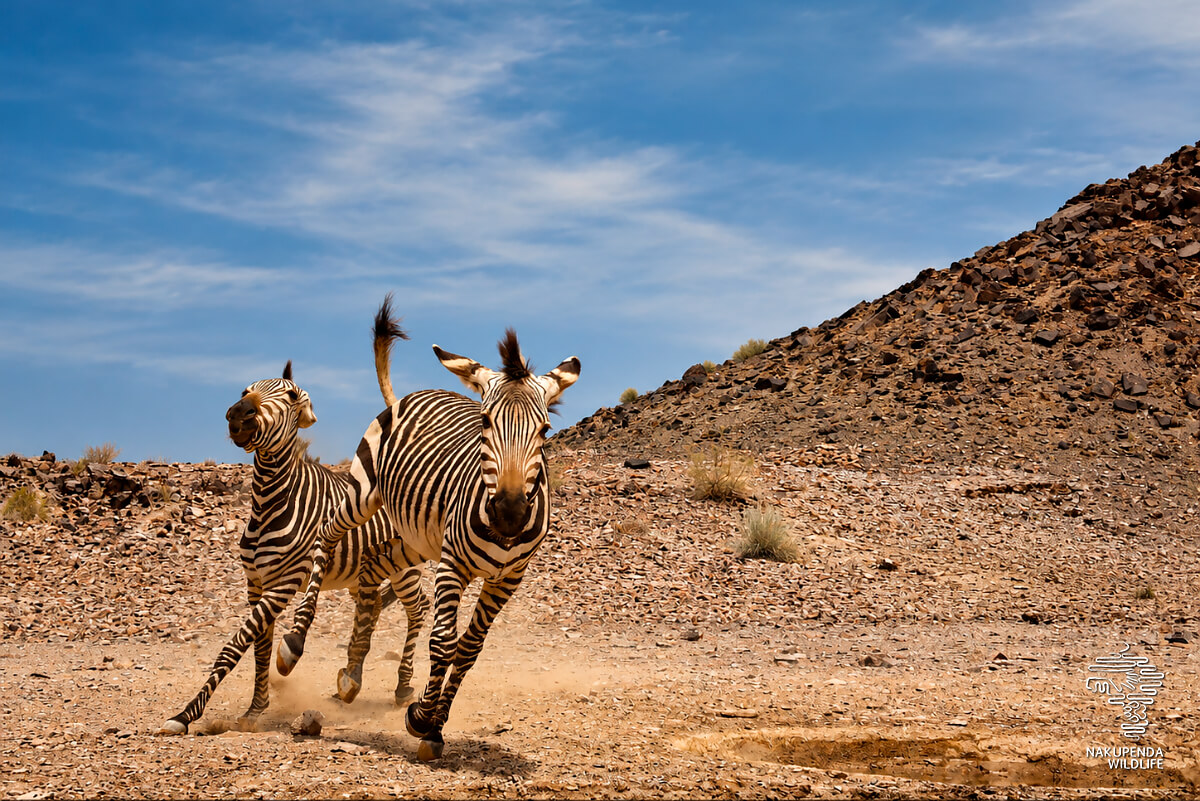
Hartmann's mountain zebra is found almost only in Namibia and southern Angola, and it is one of the species our cameras record most often.
Because our network spans a broad ecological gradient, we can follow the same species across very different landscapes and see how populations respond to changes in habitat, rainfall, and human activity.
These comparisons show what zebra need to thrive, and they help inform how land and water are managed for both wildlife and people.
Giraffes
The Architects of the Savanna
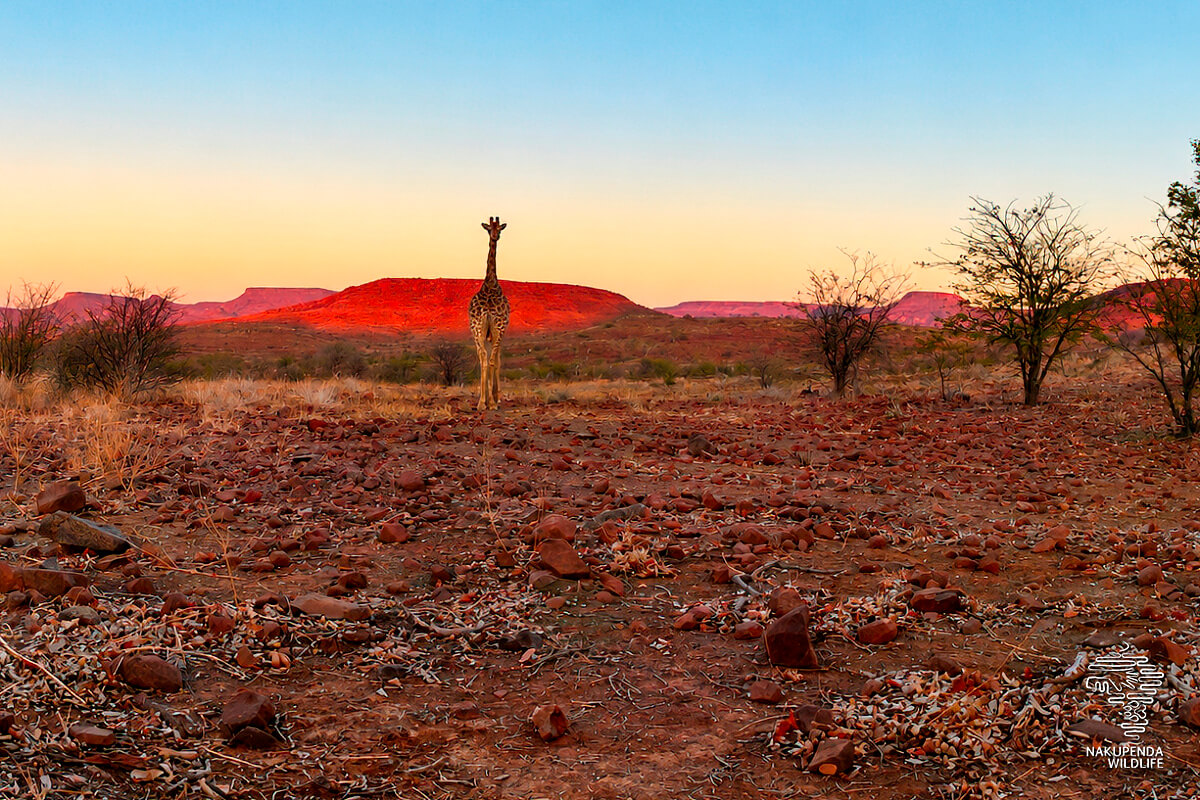
Giraffes are Africa's specialist browsers, feeding high in the canopy where few other animals can reach.
That browsing shapes tree height, growth and structure across large areas, and influences which plants thrive alongside them.
Because giraffes depend on intact woodland and the ability to move between areas, they can tell us a lot about how well a landscape is functioning.
Our camera-trap network records giraffe presence across our research sites, helping us track where they occur and how their distribution changes over time.
Cape Clawless Otters
A Clue to Healthy Rivers
One of the most unexpected species recorded by our camera-trap network is the Cape clawless otter.
In Namibia's arid landscapes, permanent water is rare and precious. Otters depend on it for the fish and crabs they hunt, so their presence along the Fish River points to a freshwater ecosystem that is still working.
Protecting carnivores, herbivores, and communities ultimately means protecting the water that sustains them all.

Why It Matters
Conservation is often built around flagship species such as lions, elephants, or rhinos.
They matter, but ecosystems do not function one species at a time.
Every detection recorded by Nakupenda Wildlife's camera traps adds to a picture of how whole wildlife communities interact and respond to change, helping direct conservation effort where it is most needed.






When you support our work, you are not helping a single species.
You are helping protect entire ecosystems and the extraordinary diversity of life they sustain.